Connecting for crops

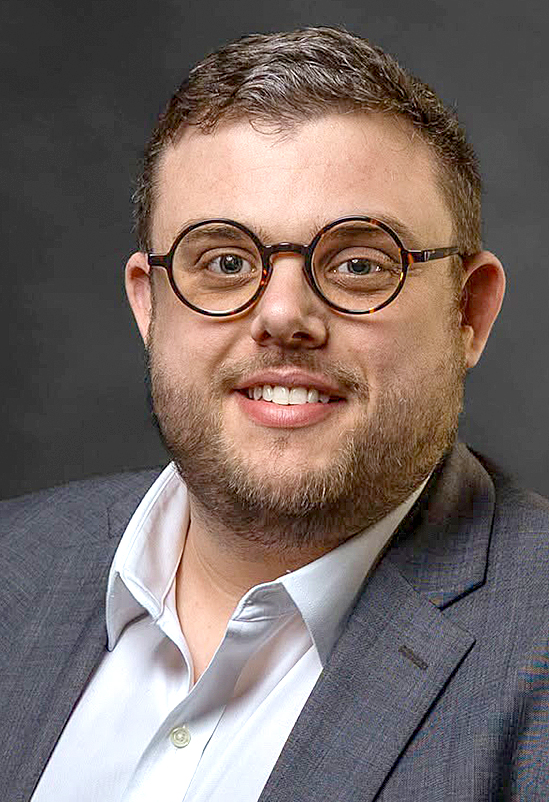
Ryleigh Rhoden presented a speech at Bradford County’s UF/IFAS Extension Farm-City luncheon on how all farmers should benefit equally from technology. Photo by Cliff Smelley.

Editor’s note: Ryleigh Rhoden, a 4-H youth, gave the following speech at the Bradford County UF/IFAS Extension Farm-City luncheon, which was held on Nov. 18. The full name of the Union County High School teacher she references is Erin Johnson.


…loading…reconnecting… loading…no internet access…internet connection problem…reconnecting…

Phew! Hopefully, we are connected.

The lack of high-speed internet service in rural areas of Florida is inhibiting greater productivity, profitability and food safety for farmers and ranchers. Without our farmers, Florida and the nation will starve. Florida is a rapidly growing state, with a population over 21 million, according to the U.S. Census Bureau. That’s a lot of people to safely feed.

“Ten percent of Florida households (mainly in rural areas) do not have access to reliable internet service,” according to the internet provider database BroadbandNow. As our growth continues, people in rural areas having adequate internet access should be a priority, which would result in better farming efficiency and food safety.

Advances in technology require advances in connectivity. Farmers with high-speed internet can easily check prices online, complete government paperwork electronically, ensure healthy crops and animals, communicate with other farmers and sell to consumers. Farmers can expand their market to a regional, national or even global audience, which will positively impact Florida’s agricultural industry and overall economy. Increased connectivity can harness all the benefits of big data collection, including reducing costs through reliable figures. Without broadband, these tasks are less efficient.

Advanced GPS technology allows farmers to precisely measure water and fertilizer input. This can save water, reduce pollution by decreasing the need for gas- and diesel-powered motor vehicles, and increase the quality of our crops by ensuring they’re growing healthy. For example, nutrient deficiencies, pest problems and even population counts can be detected or diagnosed with a drone more efficiently than motorized vehicles because drones allow one to view the entire area and even zoom in on specific areas of concern. Rural areas need high-speed internet so they can take advantage of these advancements.

After doing extensive research, it’s clear that it’s difficult for farmers and ranchers to have an adequate understanding of every acre of their crops without help from technology. I consulted with several people in farming and agriculture, who all agreed that slow or no connectivity negatively affects their production.

First, I spoke to my grandfather, Mark Mooneyhan, who has been growing palm trees and pecan trees for over 20 years. Living in a rural area, slow connectivity affects his research on bettering his crop about 50 percent of the time. With over 400 acres of farmland, he admits it’s nearly impossible to survey his land regularly. In turn, this allows pests, poachers, plant diseases and other unknowns to potentially creep in.

Though he realizes advances in technology could vastly help him keep an eye on all his land (cameras, drones), he fears the connectivity in his area wouldn’t be strong enough to support such devices. Moreover, his frustrations are furthered in that he only has one internet provider in his county. They need more options.

I also spoke with our 4-H Extension agent of the Youth Development Program for Bradford County, Samara Purvis. In her efforts to try to get kids more involved in 4-H, she’s realized more than ever that connectivity for our youth is vital, especially during our COVID-19 pandemic. If a youth didn’t have internet access, there was basically no way to stay involved with 4-H. In talking with her, it was obvious she is saddened that our youth miss out on opportunities due to lacking internet connection or availability. She feels high-speed connectivity should be affordable and accessible to every youth in the state of Florida.

Mrs. Johnson, an agriscience teacher at Union County High School, is proud to have been a part of ag education for over 30 years. Teaching in a rural area, she feels the internet is costly and unreliable. It’s difficult to convey to students the need for technology advances when all the student has experienced is limited connectivity. Having formerly taught in Volusia County, she explained that for her students who lived in town, internet was never an issue. However, her rural-residing students were at a disadvantage. Internet access for students should be non-negotiable, especially in today’s virtual times.

My great-grandfather Jack Lakes became a Master Gardener in the late 1990s in St. Johns County, Florida. He reminded me that the gardeners that have reliable internet access and take advantage of technology advancement are so much farther ahead than farmers with no connectivity. He also solemnly asked about the senior-citizen residents in rural areas that were not able to stay in touch with their loved ones during the pandemic due to no connectivity. Technology often bridges the gap for quarantined senior citizens.

Today, he is 90 years old and still has a small tomato garden at his assisted-living facility in Penney Farms, Florida. Penney Farms supports, encourages and even provides the plot of land if their residents would like to grow and maintain a garden.

In conclusion, agriculture is Florida’s second-largest industry, creating millions of jobs for Floridians and providing much economic revenue, but farmers need help to ensure efficiency and food safety. The health of Florida’s farms affects us all. Fertile soils, abundant water, ripe growing seasons and skilled farmers combine to make Florida’s agriculture industry one of the strongest in the country.

Soon, technology, thanks to high-speed connectivity, should be added to the list of contributors to Florida’s strong agriculture industry, but it should be available and affordable to everyone.