32 days in Spain 500,000 steps 

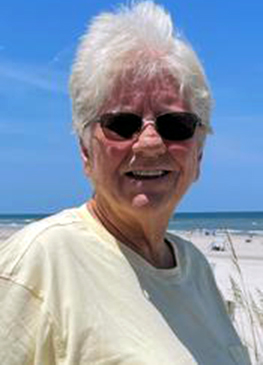
Richard Segall tells the Keystone Heights Rotary Club about his recent trip to Spain.

BY DAN HILDEBRAN 

Monitor Editor 

KEYSTONE HEIGHTS— A member of the Keystone Heights Rotary Club gave the group a recap of his recent walking tour in northeastern Spain. 

Richard Segall said he and his wife Joy have travelled internationally before. However, on prior trips, most of the people they interacted with were other tourists. 

Segal said that with a walking tour, the couple hoped to spend more time with the locals in Aragon and Catalonia, the two provinces they toured.  


Reconquest 

Segall first gave the group a primer on Spaniard history and politics, telling the Rotarians that most of Spain’s history occurred during and after the reign of Charlemagne.   

He added that Spaniards regard the reconquest of the country by Christians from the Moors as one of the most significant events in their history. 

“Christianity was practiced beginning in Spain probably in 200 to 300,” he said, “but it was not organized in what we know as Catholicism.  These were preachers going out, setting up a church and spreading the word.  The Moors came in and took over most of the country and actually made it across the Pyrenees up into a little bit of what was Gall and then were pushed back. 

The war for retaking Spain began in 850 and took 642 years to complete.  

“They still celebrate battles that occurred (during the reconquest),” he said. “On our fourth night there, the whole town appeared in the town square to celebrate the victory of a Christian duke over an approaching Moorish force. The Christians were losing and all of a sudden they noticed over the field behind the Moors a tree with a burning cross.” 

He added that the burning cross inspired the Christians to victory. 

“That was in 871 and they’re still celebrating that victory (today),” he said.  

Segall said the reconquest inspired much of the ancient structures in Spain, especially churches and forts.  

He added that many of the forts have watchtowers in which people can see for up to 25 miles away.  

Segall said that like the United States, Spaniard provinces have local powers that sometimes exceed those of the federal government. 

“We’ve all heard about the Catalonian separatists which is the movement trying to establish a recognition of the Catalan language and heritage,” he said. “While we were there,  there was a demonstration outside of our hotel for one of the (separatists) events.” 


Mountains and plains 

Segall said a big part of the trip was touring the Pyrenees mountain range, which runs from the Mediterranean to the Atlantic and separates Spain from France.   

Segall said the coastal plain of northeastern Spain is a vast agricultural area with a great variety of produce.  

The Segalls were not totally on their own in Europe.  The tour was organized. Their luggage was transported for them.  They were given specific destinations at which to stop and sometimes they were accompanied by a human guide.  However, throughout much of the trip their guides were their phones and books.  

He said trails and roads in southern Europe are well marked. Visitors to Spain, Italy and Portugal encounter signs that not only point them in the right direction and indicate distance, but also an estimated walking time.   

“So, you are not wandering around (thinking) where am I supposed to go next,” he said.  

He added that well-marked trails make it easy for those who do lose their way to get back on the right track.  

Segal said most of the hikes took place on trails in rural areas or in small villages.  

“You’re on paved roads for the most part,” he said.  “They keep us off of highways, which is a tremendous blessing. If you’ve ever driven in rural Spain or Portugal, the roads don’t have shoulders. There’s no place to run, especially if you’re coming down a mountain where your car tires are (close to) the edge on (one) side and your windows on the other side are up against the side of the mountain.” 

Before the couple began their tour, they had to pass a readiness test which included an eight-mile hike with elevation increasing by over 1,600 feet.  

Segall said that during the trip they encountered several  abandoned villages, which were the result of Francisco Franco’s efforts to industrialize and urbanize the country.  

He said another feature of Spain’s real estate is the lack of transition from urban to rural. He said he saw apartment complexes backed up to a cultivated field.  

“There is not the transition to suburbia,” he said. “It is a line.” 

Segall said the trip ended in Barcelona.  

“Barcelona is a beautiful city,” he said, “but not an ancient city because it’s been bombed, burned and destroyed a number of times. It got caught in the wrong place at the wrong time.”  

He added that now, Barcelona is one of the wealthiest cities in Spain. 


Photo: Richard Segall tells the Keystone Heights Rotary Club about his recent trip to Spain.