Life of a chaplain

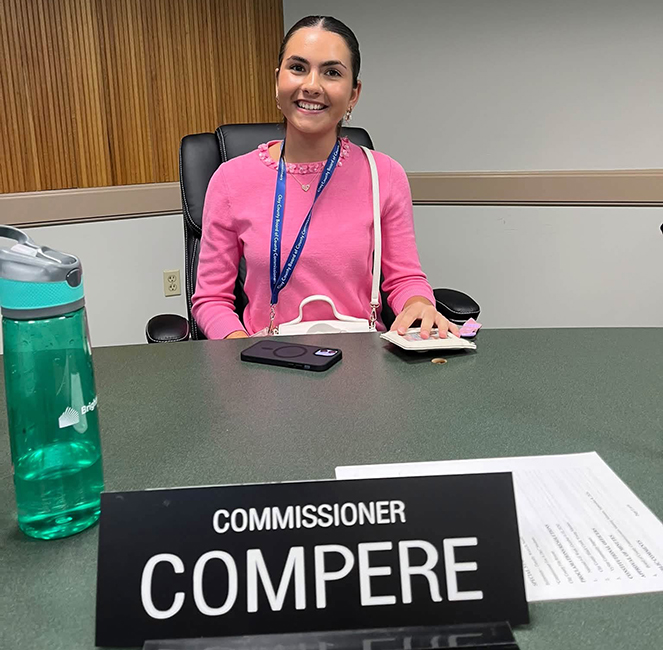
Michelle Lawson speaks to the Keystone Heights Rotary Club.

BY DAN HILDEBRAN

Monitor Editor

KEYSTONE HEIGHTS— A recently retired Florida National Guard chaplain gave a Lake Region civic group a look behind the scenes of what it is like meeting the spiritual needs of military members.

Michelle Lawson spoke to the Keystone Heights Rotary Club on March 17.

Lawson said she joined the military when she was 17, promoted to staff sergeant before beginning training to become a chaplain.

“I went through the split option program,” she said of her enlistment, “where you go to basic training after your junior year of high school, then you come back, you finish your senior year and then after your senior year you go for your specialized training.”

“It was such a blessing and a benefit to be able to come in as an E-1,” she added, “and go through all of the ranks and moving up to staff sergeant before God placed the call on my life to become a chaplain.”

Lawson said the requirements for a military chaplain are stringent and includes a Master of Divinity degree, approval from state and federal boards, ordination through a local church and an ecclesiastical endorser.

“Basically, your entire life is put on paper to be judged,” she said of the process. “Your finances, any moral choices that you’ve made, your family history and what your current family relationships are.”

Lawson was the first female chaplain candidate in the Florida National Guard, its second female chaplain and its longest-serving female chaplain.

Speaking truth to power

She said the three roles of a chaplain are to nurture the living, care for the wounded and honor the fallen.

Lawson added that another important part of the calling is speaking truth to power, which sometimes means calling out moral and ethical issues that may ruffle feathers up the chain of command.

“The person that we report to is a lieutenant colonel and they’re also the person that writes your officer evaluation report,” she said. “So, you have a moral choice to make. Are you going to call out moral issues? Are you going to address ethical things or are you going to allow what someone else’s evaluation of you drive what you say?”

Lawson also said that military chaplains enjoy confidentiality, meaning that they do not have the duty to warn that other military members have, and they may not disclose confidential information without the permission of their advisees.

Lawson said that with no active army bases in Florida, the responsibility of assisting with death notifications to families falls on National Guard chaplains.

She said that technology has created challenges with death notifications.

“We try to get ahead of media and social media,” she said.

Lawson added that doorbell cameras and other home surveillance devices have created additional challenges.

“Does anyone have the Ring doorbell?” she asked the Rotarians. “Some are motion activated, or you push the doorbell button and that activates the camera.” 

Most of the home surveillance cameras come with apps that allow residents to see who is at their door via a cell phone image.

“When you show up in your dress uniform with another service member on someone’s doorstep, you’ve already given notification before you open your mouth.”

She said it is particularly difficult when family members are not home, and they get a screenshot of officers in dress uniform at their door.

Lawson said family members reactions to death notifications range from disbelief to anger. However, she considers the duty an honor.

“It’s a privilege, and just being able to be there for the family is a great honor,” she said.

You go, you pray, and you figure it out

Lawson said serving as a chaplain can be difficult and painful, “but there’s so much joy that comes in being able to be there for people in their greatest time of need.”

She also said chaplains don’t get to pick and choose where and when to minister.

“When there’s a need, you go and you pray and you figure it out,” she said, “and you do the best you can in that moment, and you trust God for the results.”

Last year, after 21 years in the military, the last 15 months on active duty for COVID, Lawson retired.   

She opened a Lake Region counseling practice called Lawson Life Consulting where she offers pastoral counseling and crisis intervention.

“People ask me: what does it feel like to be retired or does it feel any different, “she said. “The truth is, it doesn’t because I’m doing the same thing now I did in the military, I’m just not wearing a uniform.”