BY CLIFF SMELLEY
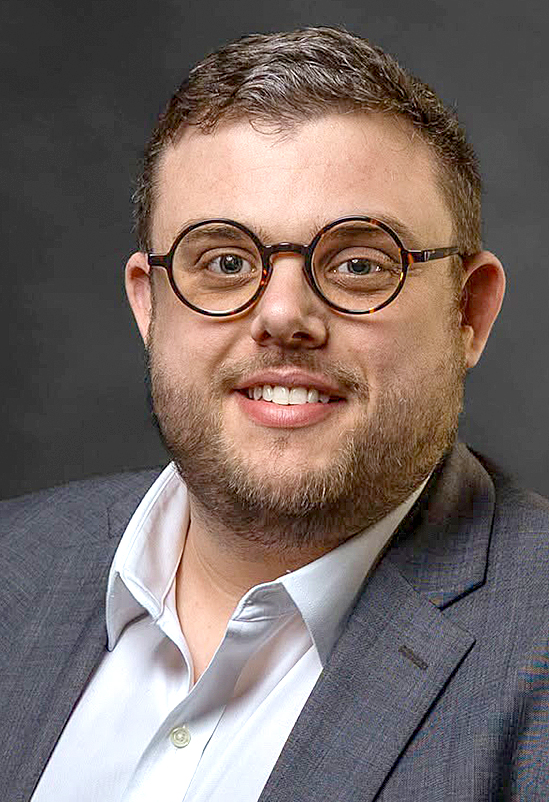
David Harris didn’t don a cap and gown, but like recent high school graduates, he’ll be experiencing a change in what has become a routine — day after day and year after year.
“I’m in that same boat now,” Harris said. “I’m graduating again.”
In reality, he’s retiring from a 31-year career in education, all of which was spent in Bradford and Union counties. Harris, who currently teaches carpentry at North Florida Technical College, thinks back to being 22 years old and beginning his career as a social-studies teacher at Lake Butler Middle School. That version of himself would’ve viewed 31 years as a long time away.
“It went by fast,” Harris said.
A career at home
Harris, who attended Union County schools, enjoyed agriculture and history, and thought he’d like to do some coaching in the future. Add to that the fact he never wanted to leave home, and education seemed like a natural career path to follow.
He attended the University of Florida and earned a degree in history. He inquired about a job in Union and was told positions were available at either Lake Butler Middle School or Union County High School.
“At the time, I was 22 years old and still had friends who were in high school,” Harris said. “I said, ‘You better give me middle school.’”
Harris admitted that before going to UF, he was interested in earning a degree in agriculture, but he couldn’t see an opportunity to teach Ag in Union County, which had instructors Tom Williams at the high school and Mark Bracewell at the middle school.
“I said, ‘Neither one of them is ever going to leave, so I better do something else.’ My second-favorite love was history,” Harris said.
As it turned out, the year he graduated from UF, Bracewell moved into administration.
“There would’ve been an opportunity,” Harris said. “A couple of years after that, they created another (Ag) position and then another position. I had plenty of opportunities.”
Though he didn’t have a degree in Ag, he did wind up teaching it after an enjoyable time at LBMS.
“It was fun,” Harris said, explaining that teaching middle school students was a good experience for a teacher right out of college. “They were young enough to still do some fun stuff, but old enough to understand how to sit down and listen.”
He also enjoyed coaching football prior to becoming an Ag teacher. Harris did so during the UCHS varsity team’s run of three straight state championships from 1994 through 1996. He was a coach for the LBMS team, but was involved with the UCHS team as well.
“That was amazing just to be a part of that,” Harris said.
As a coach, he helped create the Suwannee Middle Athletic Conference, which is known as SMAC.
“I was actually one of the writers for the bylaws of the SMAC,” Harris said. “That was neat to be able to do that.”
When Harris got the opportunity to teach Ag, he enjoyed being able to work alongside Williams.
“He had been my Ag teacher and had been a mentor of mine,” Harris said. “That was pretty special.”
Harris said he and Williams were part of a good team that consisted also of Charlotte Emerson and Scott Register.
“We worked well together, and we all enjoyed each other’s company,” Harris said.
One of Harris’ highlights to this day was coaching the Lake Butler FFA poultry team to the national championship in 2002. It was the third team ever from Florida to win at the national level and the first Florida poultry team to do so.
“That was really special to be able to do that,” Harris said. “When we were about to go on stage and receive our reward, I told (the students), ‘If you can bottle this moment, you need to do so because it’s going to be one of your top-10 moments in life probably. It just doesn’t happen to everybody.’”
Harris’ next career opportunity took him out of the Union County School District, which he had been a part of as a student or a teacher from the age of 5 until the age of 40.
“The only four years that I hadn’t been in the Union County school system was the four years I was in college,” Harris said.
A move to Bradford
Harris accepted the job of coordinator of adult programs/assistant director of career and technical education at North Florida Technical College in 2012, saying the timing was perfect to leave Union County. Harris’ two children — Ashley and Lake — were getting older, and one thing he said he didn’t want to do was be in the position to teach and/or coach them.
“I taught my kids how to do things on their own,” Harris said, adding, “Anything they did, I wanted them to do as a result of them.”
He was offered several administrative positions in Union, but Harris also didn’t want to be in the position of supervising teachers who were once colleagues.
Harris said he had been at NFTC for about a week when a colleague asked him when GED classes were going to start. He laughed when sharing the memory, saying his response was they’d have to find out who oversaw the GED classes. The colleague’s reply was, ‘You’re in charge of it.”
“That was something I had no idea about,” Harris said. “No one mentioned that to me at any point in time. I had to saddle up and get with it.”
It wouldn’t be the first time in his career he had to “get with it.” When faced with something he wasn’t familiar with, Harris always took the time to learn all he could and turn to people who would be valuable resources. For example, he knew nothing about coaching poultry teams when he began doing so in Union County.
“I went over to the University of Florida,” Harris said. “I worked with Dr. Ben Mather all summer long, and I learned poultry.”
Harris credited his first football-coaching opportunity for helping him tackle new things and to prepare himself to do the best job possible. His junior season as a player at UCHS was cut short by an injury, which also prevented him from playing as a senior. Head Coach Jim Niblack told Harris he still wanted him to be a part of his program and asked him if he’d like to coach. When Harris responded he knew nothing about coaching, Niblack cracked that everyone becomes an expert on the game when they stop playing it.
So, there Harris was, helping Mark McGraw and Wayne Pennington coach the junior varsity team as a high school senior.
He may not have expected being a student coach, but he enjoyed the experience. The same can be said of overseeing the GED program at North Florida Technical College, which turned out to be one of his career highlights. Harris liked seeing people get a second chance in life.
“Just getting a GED doesn’t mean it’s the end of the road for you,” Harris said. “That’s just the beginning.”
Three years after serving in a coordinator position, Harris moved up to the position of director, replacing Christy Reddish.
“Chad Farnsworth was the superintendent at the time,” Harris said. “He offered me the directorship here at the center. That was a very rewarding job — a tough job.”
Harris said the director as well as other staff members have to juggle numerous responsibilities at North Florida Technical College due to the fact it serves secondary and post-secondary students.
“You have to wear a lot of different hats when you work at a center such as this,” he said. “Even though it’s small, we still have to do a lot of the same things a center with a larger population has to do.”
Tough job aside, Harris said “it was really, really a fun time.”
“We had a great staff,” Harris said.
Another three years went by before Harris found himself in another position, that of Bradford County Schools’ assistant superintendent.
“It was not on my radar at all,” Harris said, who was offered the position by Superintendent Beth Moore.
Harris said he’s proud of the things that were accomplished during the time he was assistant superintendent and Moore was superintendent. He noted such things as renovations of the Bradford High School auditorium, science labs and tennis courts. It was also during that time the artificial football field was installed at BHS and the baseball program got its own separate facility.
“We were able to do some things here I felt like were very long-lasting,” Harris said.
Harris said being assistant superintendent was kind of like being a football coach.
“You have a situation, and you have to find a solution for it,” he said. “You have to find that solution very quickly, and it has to be right, or at least the majority of people need to feel it’s right.”
He turned to numerous people for advice, including those he’d worked with in the past, as well as speaking to people in larger school districts.
“The thing is, the same problems we have here are happening in every other school,” Harris said. “It might take a little bit longer to get to the smaller places like Bradford and Union counties, but they’re going to happen here, too, at some point in time.
“A lot of times, the larger districts have already experienced some of those problems. You can turn to them, and they’re always willing to help out.”
Networking with people in organizations such as North East Florida Educational Consortium was also a benefit, he said.

Classroom return
For the last three years, Harris has filled the role in which he began his career — that of classroom teacher. It was an easy transition for him to make as far as simply teaching, but the challenge has been overseeing carpentry lab work that can be dangerous.
Harris, though, oversaw some potentially dangerous situations as an Ag teacher, too.
“It doesn’t matter if you’re de-horning cows in Ag or you’re letting kids work with bandsaws and table saws and skill saws — things that can really hurt them,” Harris said. “You have to be able to, number one, teach them how to be safe, and number two, make sure everyone’s on task for being safe.”
In fact, an element of danger is something that those who aren’t career and technical education teachers can fully understand.
“What we do is dangerous,” Harris said. “In welding, kids are dealing with 9,000 degrees over there and more. They’ve got to know what they’re doing.
“There’s no horseplay over here because we can’t afford it. Lives and limbs are at stake every day with career and technical education.”
Career and technical education is something Harris strongly believes in because it sets students up for opportunities, giving them something that goes beyond standardized-test results and state-assigned school grades.
“I understand that school grades are important,” Harris said, “but not a single employer who I know of has ever asked a potential employee, ‘What was your school grade?’ You ask them what their skills are.
“That’s what we’re developing here (at NFTC). We’ll let someone else worry about school grades. (Grades are) important to the educational system because funding is tied to that, but in the grand scheme of things, it’s the skills that students walk away with. Not just the skills, but the experiences they walk away with.”
Retirement
Harris believes that sometimes it’s just the right time to walk away, saying, “Society changes, but I don’t think we (as individuals) change quite as rapidly. Sometimes, it’s good to make room for some younger people to come in and have a chance to do some of those things. I’ll find something else.”
What that something else is remains to be seen.
“I don’t know what the next chapter will be like, but that’s OK,” Harris said, adding, “I’ve got some plans, but I’ve got to figure out what the next step is because come August, I’m not going to be here (at NFTC).”
He doesn’t rule out a return to education. If he’s learned one thing in his 31-year career, it’s that you never say never. Teaching again may not be in his plans now, but he knows too well that plans change.
“My original plan was to do 10 years at the middle school, 10 years at the high school and 10 years in administration in Union County,” Harris said.
It all worked out for the best, though, giving Harris opportunities he never envisioned, but which he enjoyed.
“I got to meet so many people and do so many things,” he said. “I’ve had a great career.”