BY MARK J. CRAWFORD
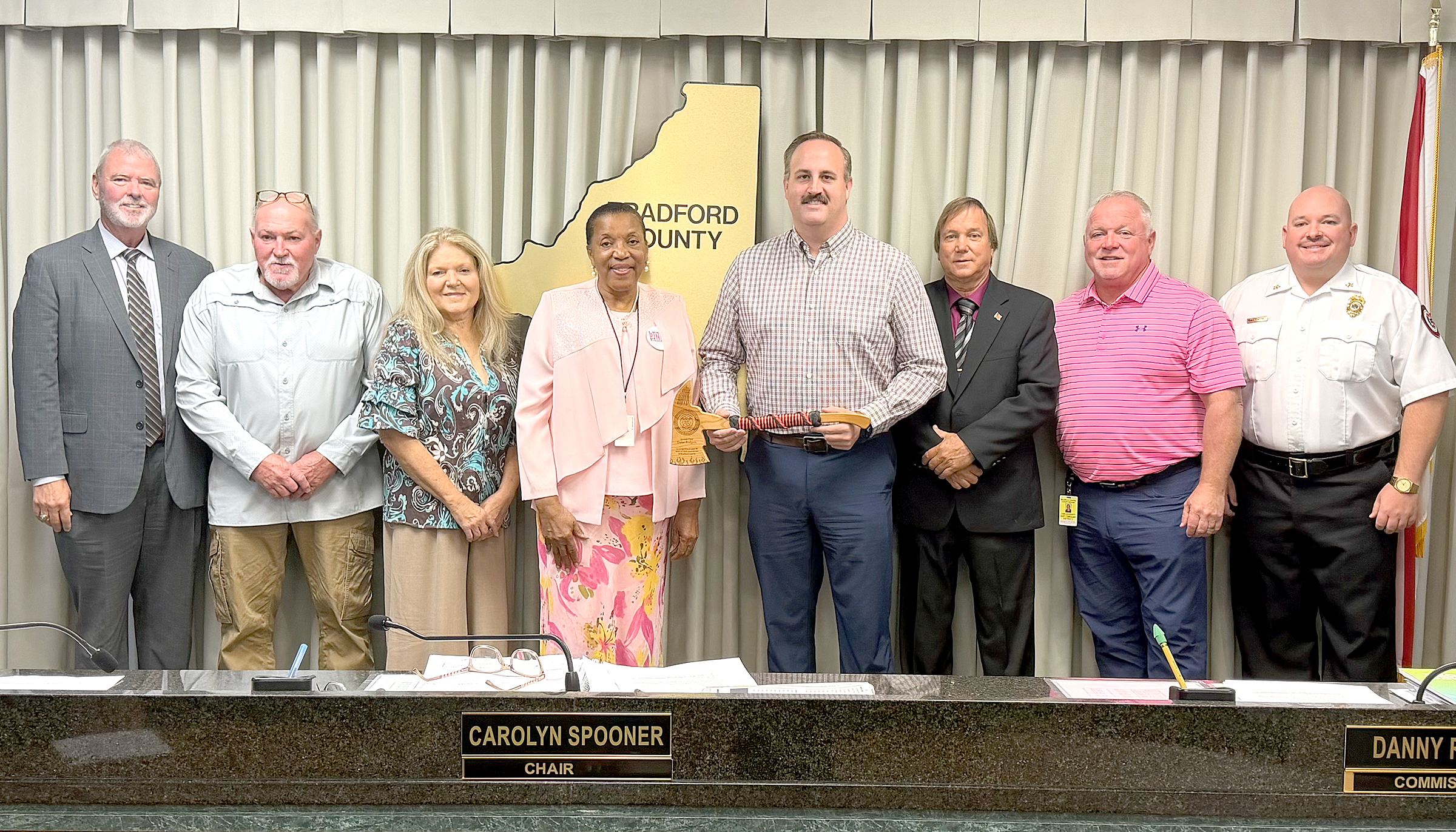
The Bradford County Commission decided not to move forward with the proposed energy conservation project or an RFP process involving Schneider Electric at their July 1 meeting.
After discussion and legal advice about procurement concerns, the commission reached a consensus to explore alternative, smaller-scale or in-house solutions for facility repairs and energy savings rather than pursuing the larger project with Schneider Electric. This will include finding ways to cut costs at the jail, which has the government’s highest utility bill.
After months of work, Schneider Electric previously presented a project aimed at modernizing county facilities, reducing long-term energy costs, and leveraging federal incentives for renewable energy.
The project would have addressed deferred maintenance needs at key county buildings, including the courthouse and jail. The plan called for repairing and replacing aging roofs, upgrading lighting to energy-efficient LEDs, and installing solar panels to offset electricity costs.
The total project cost was $3.6 million, but with a large federal tax credit for solar installation and a $350,000 contribution from the county’s ARPA funds, the net cost would be reduced to $2.45 million. Over 30 years, presenters projected the project would save the county $6 million, with a positive return on investment expected after 14 years.
Commissioners weren’t ready to commit, and attorney Rich Komando raised issues about procurement, saying the way didn’t the project was brought to the county did not conform with the idea of “piggybacking” off another county’s contract, which required receiving the same product for the same cost. To properly consider a proposal, the county should advertise a request for proposals from all interested companies.
But rather than move forward with additional proposals, the consensus was to begin addressing deferred maintenance problems one at a time. Commissioner Carolyn Spooner wanted the county to continue looking at alternatives such as solar power generation, which could reduce the jail’s light bill.
Schneider will be paid for its work delivering a plan to the board. The previously stated amount was $34,000.