
BY DAN HILDEBRAN
Dan@BcTelegraph.com
A St. Johns River Water Management District official told the district’s governing board that the Black Creek Water Resource Development Project is 97% complete, with only work at the project’s treatment facility in Camp Blanding remaining.
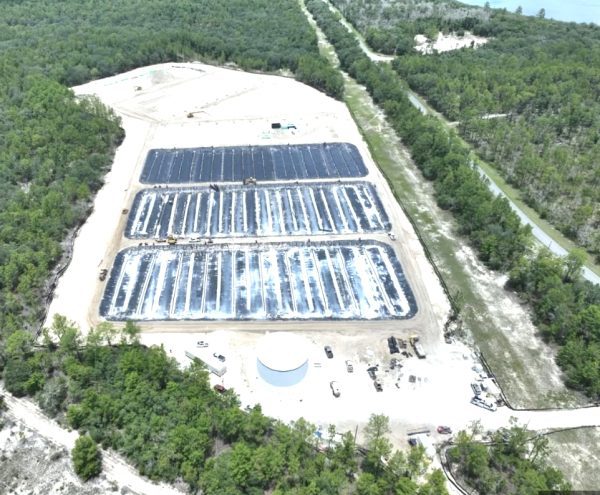
The project consists of a 17-mile pipeline, pumps, and a treatment facility within the National Guard training facility. It could divert up to 10 million gallons of water a day from Black Creek to Keystone Heights area lakes. It is designed to replenish the Floridan Aquifer and is part of the district’s recovery plan for minimum flows and levels of Lake Brooklyn and Lake Geneva.
Dale Jenkins, the district’s division director for infrastructure and land resources, reported progress on the treatment facility’s cells, but alerted board members to a problem with one of the pumps at the intake site where the lower prong of the creek crosses State Road 16, near the Clay County Animal Shelter.
“Because we’re getting close to completing the project,” he told board members during a September 9 meeting, “we did some testing of the pumps. We found out that one of the pumps is not working very well.”
Jenkins said the contractor that installed the pump will inspect it and that hopefully any issues will be covered by the pump’s warranty.
Jenkins also updated board members on the six cells at the treatment facility. Cells 1 through 3 are complete.
Approximately 70% of the media installation in Cell 4 is finished, with full completion expected by the end of September. Following this, plant installation will begin, with rinsing of the media slated for the first week of October.
Stone placement is fully completed in Cells 5 and 6, and all piping work in these cells is finished. These cells are now ready for media installation, which will follow the completion of Cell 4, provided the media delivery remains on schedule.
Jenkins said the treatment facility’s electrical and automated control systems, including lightning surge protection, are ongoing to ensure operational reliability in the region’s lightning-prone environment. The control system, which enables fully automated and remote operation of the facility, is nearing completion with minor adjustments underway.
The project team is also evaluating enhancements to erosion control and energy dissipation at the outfall location into Alligator Creek. These measures aim to mitigate potential erosion or turbidity issues when the facility operates at full capacity, ensuring long-term environmental sustainability.
Board member Douglas Bournique raised questions about the facility’s long-term maintenance, particularly regarding the media lifecycle.
Jenkins explained that the media, critical to the facility’s water treatment process, has an estimated lifespan of 7 to 13 years. During periods when Black Creek’s flow drops below 25 cubic feet per second, pumping ceases, allowing the media to “rest” and potentially extend its lifespan. Media replacement is accounted for in the operations and maintenance budget, with complete replacement planned when the media reaches the end of its functional life.