No one knows the future without property taxes

BY MARK J. CRAWFORD

[email protected]

If Florida legislators in their upcoming session propose a constitutional amendment that allows voters to cut or get rid of their property taxes, most seem to agree those taxes will disappear.

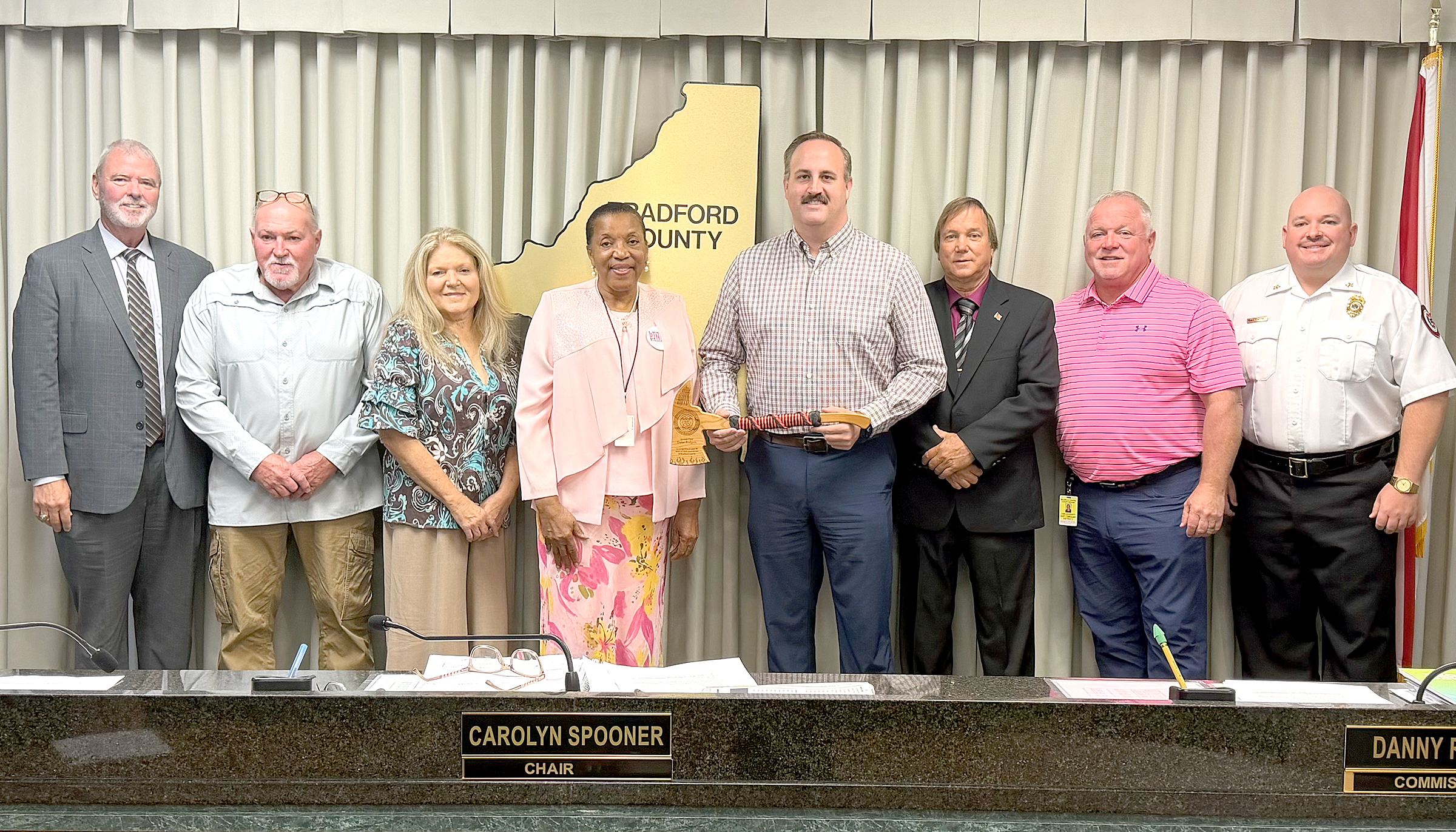
Commissioner Chris Dougherty thanked Rep. Chuck Brannan for appearing at the Sept. 25 commission meeting to discuss state funding and understanding the importance of that revenue to fiscally constrained counties. He had a question, however, about how the state would help counties, cities and school boards pay for public safety, education and other needs if state eliminates property taxes.

“To be able to still fund fiscally constrained counties, and to be able to fund public safety and schools and, you know, our road projects and things like that. How do you see that looking as far as pulling from other counties to be able to do that?” he asked. “Everybody wants free ice cream, but somebody’s got to pay for it.”

“Well, it’s like dominoes. Everything affects everything else. There are ramifications to everything,” he said. While the figure $300 million has been floated by Gov. Ron DeSantis to make those counties whole, he wasn’t sure that was enough. He did find truth to the governor’s comparison of the amount to “dust” in the state’s massive $117 billion budget.

“It’s going to have to be made up somewhere,” Brandon agreed. “How’s the fair and equitable way to do that?”

Television sound bites about eliminating property taxes sound great, he said, asking who would vote against it. 

“In places, they’re too high, but I know in places like Starke and Macclenny and Lake Butler, it’s hard to stitch that budget together and pull it together and make it work,” he said.

In his eighth and final session, Brannan said they will have work hard to protect the district and make sure local governments are held harmless. A Select Committee on Property Taxes formed in the House is studying the issue from many angles. Brannan said there have been a lot of proposals.

“I wish I could answer the question of where it’s going to end and how it’s going to work out. I don’t know,” he said.

Dougherty pointed out that $300 million divided by 27 fiscally constrained counties provides less than Bradford currently receives in property tax revenue.

“We’re trying to figure out how that’s going to cover all fiscally constrained counties. There’s going to be some things that are missing. And if it’s raising sales tax, or whatever it is, somebody is going to pay for it,” Dougherty said. 

Brannan said he’s seen proposals as high as a 15% sales tax, which might be fine if property taxes are zero. But then, he said, it would be tough to pay 15% on top of the price of a new car. The easy part is throwing out ideas, but the hard work will be in the details, he said. 

“We’ve got to do it in a careful and proven way that protects small, as you said, the 27 counties,” he said.