

Dan@BcTelegraph.com
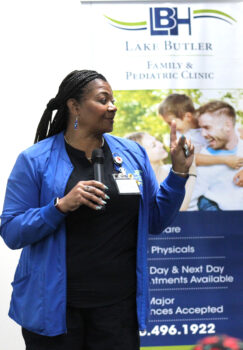
Lake Butler Hospital recognized Colorectal Cancer Awareness Month with a presentation during its monthly “Let’s Thrive” seniors’ meeting on March 12.
Physician Assistant Angelica Kraus, PA-C, noted that incidence rates among adults under 50 have been climbing for decades, while the disease remains one of the most preventable and treatable cancers when caught early.
Colorectal cancer is the third most commonly diagnosed cancer in both men and women in the United States and the second leading cause of cancer death, the presenter said, with roughly 158,000 new diagnoses and approximately 54,000 deaths occurring each year. One in five cases is now diagnosed in people under the age of 55.
“This is one of the most preventable and treatable cancers,” Kraus told the group. “Screening works, and please don’t put it off.”
Rising Rates Among the Young
Incidence among adults under 50 has increased roughly 2 percent annually since the mid-1990s, Kraus said, and death rates in that age group are rising 1 percent per year — a trend running opposite to older adults, who have seen improvements in both diagnosis and survival. Younger patients are also more likely to be diagnosed at advanced stages of the disease.
In response to the shifting statistics, national screening guidelines have been lowered. Average-risk adults are now advised to begin screening at 45 and continue through age 75, with decisions about continuing beyond that age made in consultation with a provider. Those with a family history of colorectal cancer or advanced polyps, particularly involving first-degree relatives, should begin screening at 40, or 10 years before the youngest affected relative’s diagnosis, whichever comes first.
Know the Risk Factors
Kraus outlined two categories of risk factors. Non-modifiable risks include age, a personal or family history of colorectal cancer or polyps, inflammatory bowel conditions such as Crohn’s disease or ulcerative colitis, certain genetic syndromes, and African American or Alaska Native heritage.
Modifiable risks that patients can address include obesity, physical inactivity, smoking, heavy alcohol use, and a diet high in red and processed meats and low in fruits, vegetables, and fiber. More than half of all colorectal cancer cases are linked to those changeable factors, the speaker said.
“Small changes do add up,” Kraus advised, noting that maintaining a healthy weight, exercising regularly, limiting processed foods, avoiding smoking, and limiting alcohol not only reduce cancer risk but also improve overall daily health. Getting tested for vitamin D deficiency was also recommended, with Kraus noting the deficiency is more common than many people expect, even in sunny climates like Florida.
Warning Signs Not to Ignore
The physician assistant listed several red flags that warrant a prompt visit to a health care provider regardless of age: blood in the stool or rectal bleeding, persistent abdominal pain, changes in bowel habits such as constipation, diarrhea or pencil-thin stool, unexplained iron-deficiency anemia, unintentional weight loss, and fatigue or weakness.
“Regardless of your age, if you notice these things, that should prompt a visit to the provider,” she said.
Screening Options
Colonoscopy remains the gold standard for screening, Kraus explained, because it allows a physician to directly visualize the entire colon and remove polyps before they develop into cancer. When caught at an early, localized stage, the five-year survival rate is 91%. That figure drops to 14% when the cancer has spread to distant organs.
Other approved screening options include stool-based tests done annually, DNA stool tests such as Cologuard completed at home and mailed in every three years, CT colonography and flexible sigmoidoscopy performed approximately every five years. Any abnormal result from an alternative test leads back to colonoscopy for confirmation.
Disparities in Care
Kraus highlighted significant disparities in who is most affected by colorectal cancer. Alaska Native individuals have the highest national incidence rate. African Americans experience a mortality rate 43 percent higher than that of white Americans. Lower-income and uninsured patients are less likely to be screened and more often diagnosed at later stages when symptoms have already appeared. Rural communities also face reduced access to both screening and treatment.
“As a community, I want us all to strive toward minimizing these disparities,” the presenter said, encouraging attendees to spread awareness, help connect others with financial assistance programs, and advocate for those who face barriers to care.
Overcoming Reluctance to Screen
Kraus addressed common reasons people avoid screening. Those who say they have no symptoms were reminded that early-stage cancer frequently causes none. Those who cite the colonoscopy preparation as a deterrent were told that providers can help develop a tolerable plan. Those who feel too young were reminded that the guideline is now 45. And those without a family history of the disease were informed that most colorectal cancers occur in people with no family history.
“That is one day of inconvenience for years of protection and peace of mind,” she said of the prep process.
Resources
Kraus directed attendees to the American Cancer Society, the Colorectal Cancer Alliance and the Centers for Disease Control and Prevention for additional information and resources. The closing message emphasized three points: colorectal cancer is preventable, detectable and treatable.
“Take good care of yourself and your loved ones,” Kraus concluded. “I wish you all good health.”