
 BY DAN HILDEBRAN
The Keystone Heights Planning and Zoning Board voted 4-1 on September 22 to recommend denying a proposed amendment to the city’s future land use map and rezoning for a 2.47-acre parcel at 200 Northeast Commercial Circle, citing risks of “spot zoning” and incompatibility with the surrounding commercial corridor.
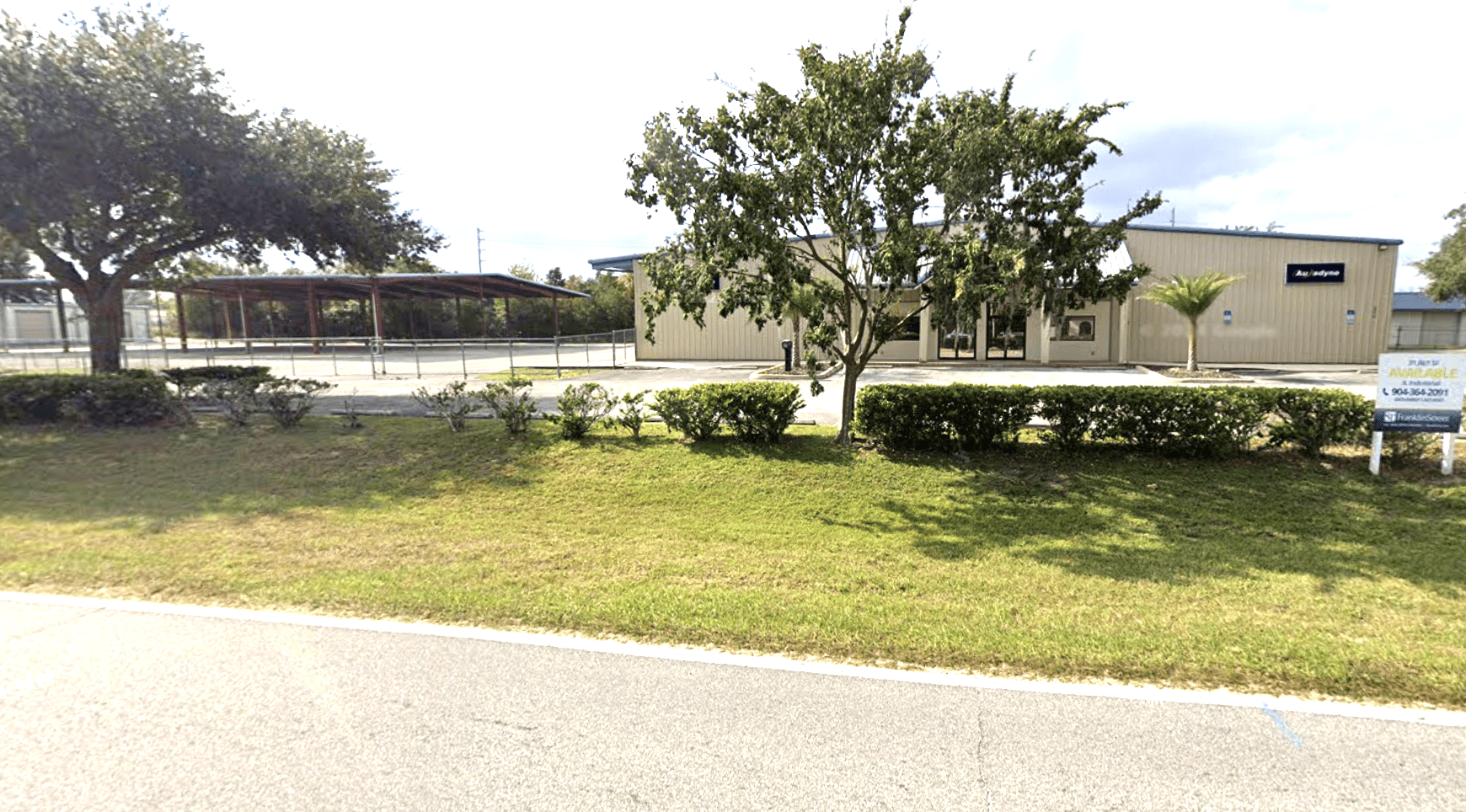
The property, located adjacent to the local post office and featuring two vacant buildings totaling over 16,000 square feet, a large canopy structure, and utility sheds, has remained largely idle since the closure of a former lumber yard and its subsequent use as a manufacturing facility for specialized foam.
Applicant Bob Mitchell, owner of Property Armor, sought to redevelop the site for his Jacksonville-based business specializing in air conditioning parts, security cages, and powder coating operations.
The change would shift the land use designation from commercial to light industrial, allowing enclosed warehousing, fabrication, and auto repair-like activities under the city’s comprehensive plan.
Staff planner Janice Fleet endorsed the proposal, emphasizing its alignment with the Keystone Heights Comprehensive Plan.
“The redevelopment of the site for light industrial land use is consistent with the surrounding development,” she said. “It will promote economic development within the city.”
Surrounding properties include a mix of commercial retail, light industrial warehouses, and institutional uses like the Lake Area Ministries food bank across the street.
Planning and Zoning Board members, however, raised questions about the project’s fit in a town they described as a “small town tourist destination.”
Dr. Geraldine Robbins voiced early skepticism, arguing the shift could undermine the community’s character by introducing non-retail industrial elements.
“My view is that the community is going to be primarily a tourist destination… to introduce anything other than light stores… is not consistent,” Robbins said.
Steve Hart echoed concerns over compatibility, particularly with a planned 50-acre residential development north of the site.
“There’s going to be a road directly across from your property that goes into… a residential development,” Hart noted, pressing Mitchell on potential impacts like traffic and visual aesthetics.
Mitchell assured the board his operation would be fully enclosed, with no outdoor storage, minimal waste beyond cardboard, and low traffic—primarily 10-15 employees, daily parcel deliveries, and twice-weekly semi-trucks.
Mitchell said the parcel is currently valued by the county property appraiser at $1.1 million. He has it listed for over $3 million.
He then detailed his business’s origins, starting with air conditioning components in 2003. The company pivoted to anti-theft security cages amid a copper theft epidemic, now serving clients like Walmart.
“We’re bringing 10 to 15 employees… I’m going to have to hire from the community,” he said.
On environmental questions, Mitchell described powder coating as a non-toxic process using electric-charged powder baked in ovens, with MIG welding ventilated outdoors and no refrigerants or flammables handled.
After no public comments, the board deliberated intensely. Fleet clarified that light industrial could generate fewer trips than a bustling retail operation like a grocery store, potentially easing traffic burdens.
However, board members fretted over unintended future uses, such as a used car lot or auto repair shop if Mitchell sold the property.
The recommendation now heads to the city council for final consideration.
Mitchell, who plans to remove the property from the market if approved, expressed optimism but deference to the process. “I appreciate… keeping the character of the county. I’m from McClenney, so I understand small town,” he told the board.
