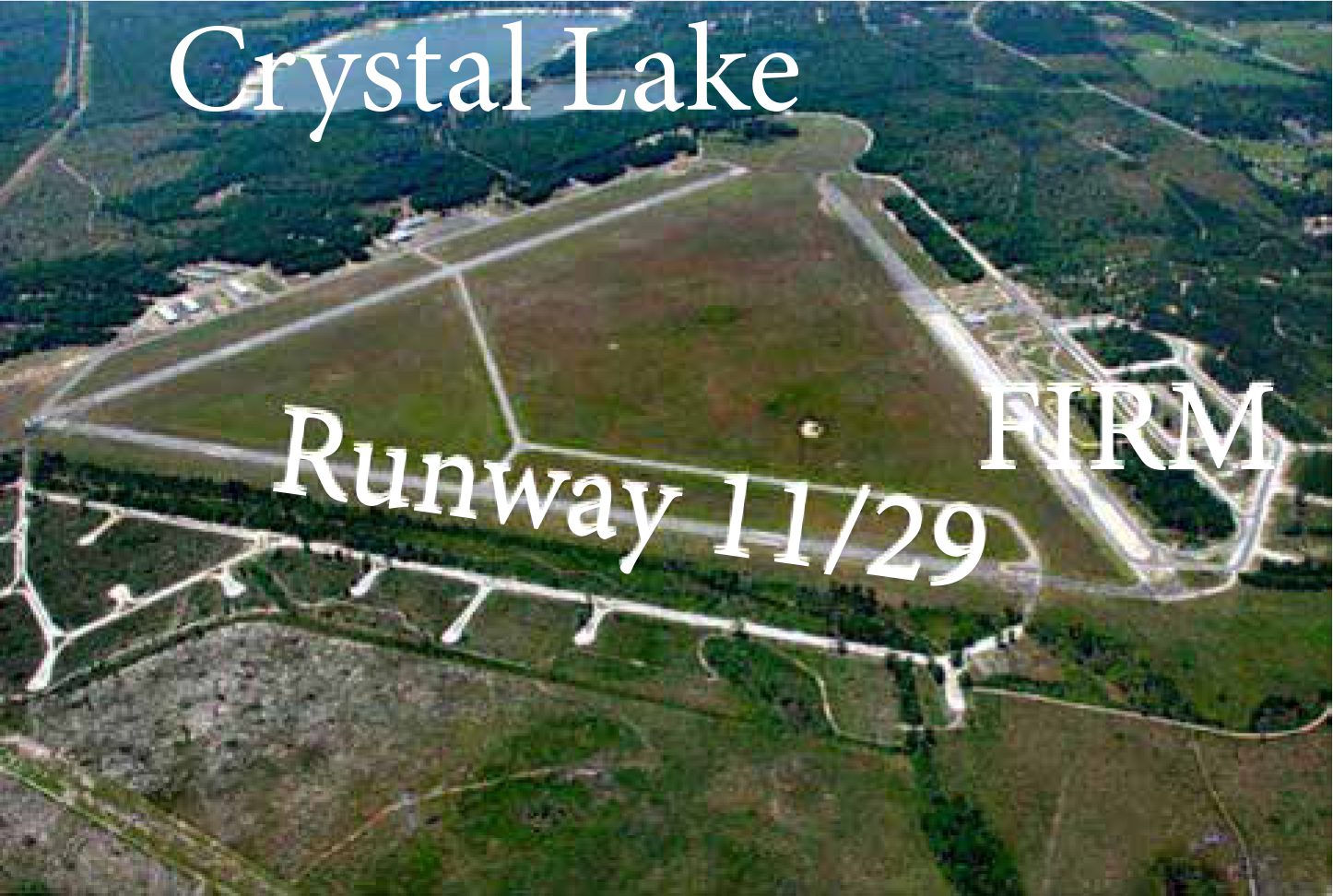
The Florida International Rally and Motorsports Park, Inc. filed a lawsuit in Bradford County circuit court, alleging that its landlord, the Keystone Airport Authority, breached its lease by failing to obtain Federal Aviation Administration approval for the lease.
The tenant, commonly known as the FIRM, further alleges that the board “deliberately and unfairly interfered with FIRM’s operations by issuing arbitrary directives, obstructing communications, and engaging in retaliatory conduct against FIRM”.
“As a result,” lawyers for the motorsports park wrote in a 17-page complaint, “FIRM has been deprived of the full benefits of the lease and has suffered significant economic loss.”
The litigation marks the latest escalation of a dispute between the airport and the motorsports park that has been ongoing for nearly 18 months.
According to airport officials, the dispute began after the Federal Aviation Administration discovered, in February 2024, that the airport was not charging the FIRM fair market value for its ground lease. The federal agency also claimed the airport failed to apply for a land use change that would’ve allowed the racetrack to occupy the western part of the airfield, even though it was not an aeronautical concern. Most critically, the FAA said that part of the racetrack intruded into the runway protection zone of runway 11/29.
The triangular-shaped former Keystone Army Airfield has two active landing strips. Runway 11/29 runs along the airport’s northern boundary adjacent to Camp Blanding. Runway 5/23 is parallel to Airport Road. A third runway, parallel to State Road 100, is no longer active and is occupied by the motorsports park.
Approximately one-half of the airport lies within Clay County, while the western half, where the motorsports park is located, is in Bradford.
Airport Board Chair Jim Eifert told board members during a recent meeting that the FAA is growing impatient with what it sees as a lack of progress in resolving the land use violation, runway protection zone incursion, and the airport not receiving fair market value for the lease.
The airport relies on the federal agency for millions of dollars in capital improvement funding, including grants for runway and taxiway rehabilitation, as well as hangar construction.
Circuit Judge George Wright has scheduled a July 31 evidentiary hearing in Starke, where he will listen to both sides and may act on the FIRM’s emergency motion for a restraining order preventing the airport from moving or demolishing the part of the track that intrudes on runway 11/29’s runway protection zone.
In its corrective action plan submitted to the FAA, the airport said it would have the track out of 11/29’s RPZ by June 25. However, the track remains in place.
The FIRM’s lawsuit also accuses the airport of breach of duty of good faith and fair dealing, retaliation in violation of the First Amendment, violation of the public’s right to be heard, and violation of Florida’s Sunshine Law.
However, the breach of lease appears to be the complaint’s strongest argument, as the airport did not obtain FAA approval for using the nonfunctional runway for non-aeronautical purposes when the lease was first signed in 1999.
BY DAN HILDEBRAN