
Board to get repair update in November as Keystone Heights residents ask when water will flow
Dan@BcTelegraph.com
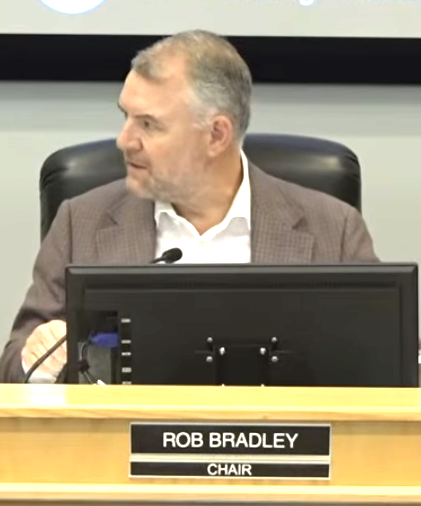
The chairman of the St. Johns River Water Management District’s governing board said Oct. 13 the district will repair the broken Black Creek pipeline and turn it back on, while also holding accountable whoever is responsible for the failure.
“Make no mistake, the pipeline works, it’s going to work, it’s fine,” Chairman Rob Bradley of Fleming Island said during the board’s monthly meeting. “These things happen. You don’t know that there’s an issue with a connection until you turn the thing on and it runs for a while.”
The Black Creek Water Resource Development Project is designed to take excess flow from Black Creek in Clay County, pipe it to a treatment facility on Camp Blanding and discharge the treated water into Aliigator Creek to recharge Keystone Heights-area lakes and the Upper Floridan Aquifer. The district announced Aug. 7 that water was flowing through the system. Four days later, on Aug. 11, the pipe burst beneath State Road 21 between State Road 16 and Sharron Road, eroding the ground under the highway and reducing it to one lane.
Bradley said he wants an update on the repair on the board’s November agenda.
“I know we’re still in the midst of looking about what needs to be done and how we’re going to fix it, with the idea that we want to get it online as quickly as possible to take advantage of the fact that we have so much rain coming,” he said. “Now we know the issue, we’re going to fix it, and it’s going to work. So, it’s not mystery, it’s not complicated, and it’s not something that is anything other than just roll up your sleeves and get it done.”
Residents want data
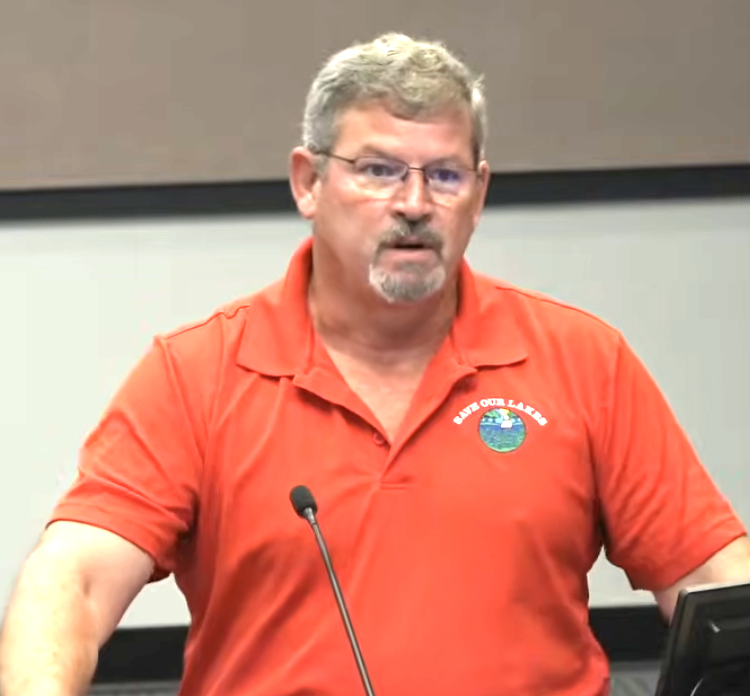
Bradley’s comments followed a request from Scott Slater, president of the Keystone Heights-based Save Our Lakes Organization and the only public speaker at the meeting.
Slater said his phone “started blowing up” that morning with pictures of crews excavating along State Road 21, which he said he believed was additional inspection work. He asked the board to consider releasing public progress reports on the repair and on the pipeline’s operation once it restarts.
“People want to know when we are going to get water, and how much water are we getting when it is operational,” Slater said.
Who pays
Board member Ron Howse of Cocoa, speaking as an engineer, said construction failures often set up a conflict between fixing a problem quickly and determining who should pay for it.
“If you fix it too soon and you don’t establish blame, … you’re going to step out and spend money that should have been spent by a faulty problem,” Howse said. “Why did this fail? How did it fail? Will this solve the problem? Who’s responsible for the failure? And all those things take extra dramatic time.”
He added that “no one’s real fast to write checks” when there are construction problems.
Bradley agreed.
“The district is going to take control and fix the pipe, but we’re also stewards of taxpayer dollars,” he said. “We’re doing all the things that need to be done to protect those taxpayer assets, and we will hold accountable those that need to be held accountable when things are not done properly.”
When Howse noted that pursuing accountability slows the process, Bradley said, “It does. And that’s the challenge. And it’s worth it. … We are not being imprudent. We’re doing it step by step, and we’re going to get it done.”
Neither Bradley nor other board members said what caused the break, who built the failed section or how long repairs are expected to take.
Drought lingers locally
The discussion came as the district’s hydrologic report showed Bradford and Clay counties lagging the rest of the district in drought recovery.
Tim Miller, chief of the district’s Bureau of Water Resource Information, told the board that heavy rain in early October improved conditions districtwide, with every county now averaging more than 35 inches of rain over the past 12 months. But Bradford and Clay remained below 40 inches, in the moderate drought category. Normal 12-month totals are about 51 inches.
Miller said Lake Brooklyn’s water level dropped from August to September and remained below average for this time of year. He also noted that the greatest aquifer recharge benefit comes from rain falling in the district’s western counties.
Miller recommended keeping the Phase III extreme drought water shortage order, which the board approved in May for select counties, in place for now. Executive Director Mike Register said he hoped improving conditions would allow the district to lift the order, possibly before the board’s next meeting.
In other business, the board unanimously re-elected its slate of officers, keeping Bradley as chairman. Slater thanked board members for agreeing to stay on.
“You guys ask good questions, you bring up good topics of discussion, you take interest in the public’s comments,” he said.