Save Our Lakes members want answers on removal of trees

BY JENN SAMSEL

Special to the Monitor

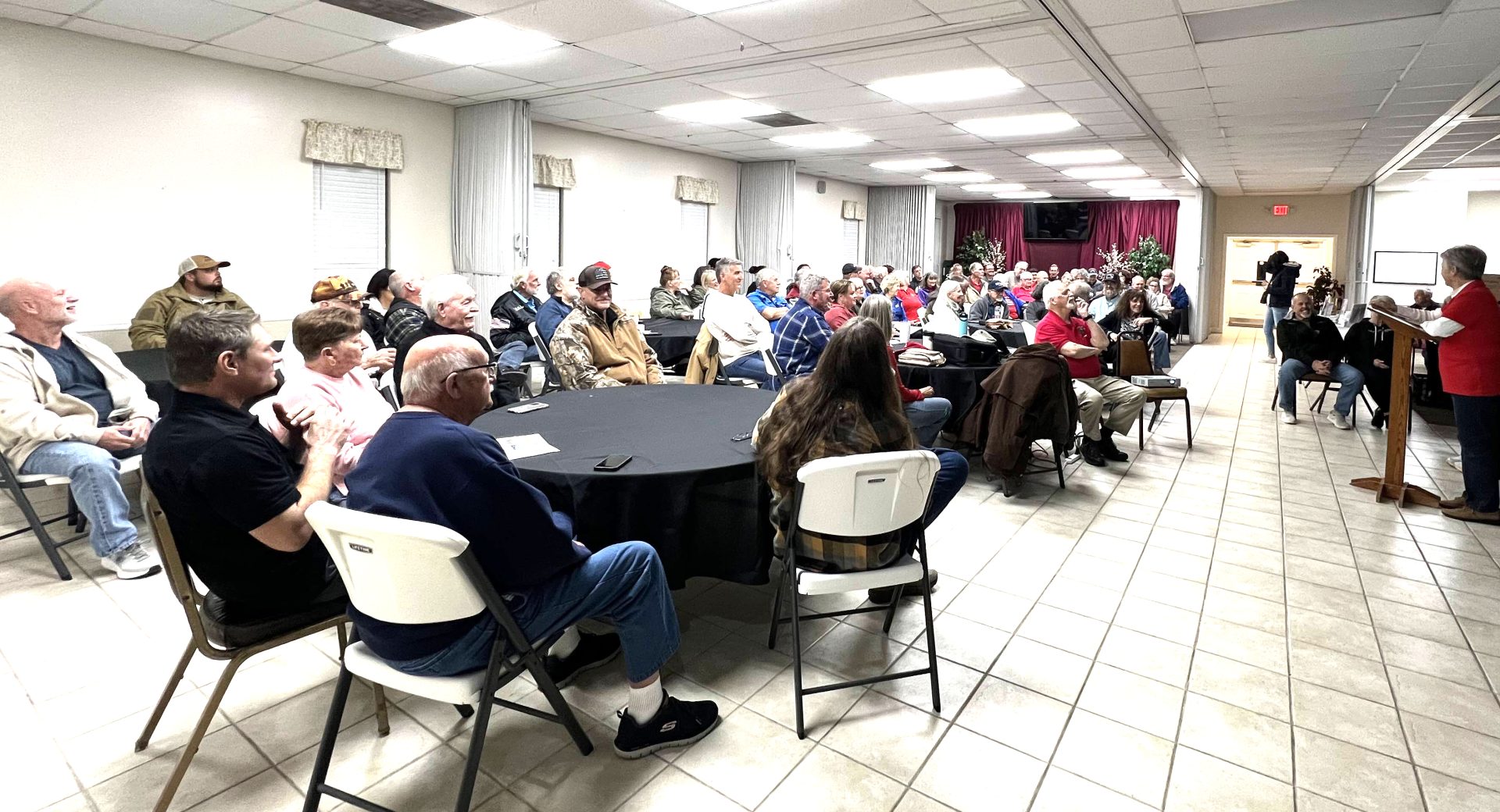
The January 14 Save Our Lakes Organization Meeting was well attended. Everyone eagerly anticipated the completion of the Black Creek Water Resource Development Project, designed to raise water levels on Lakes Brooklyn and Geneva.

The Mayor of Keystone Heights, Nina Rodenroth, and City Council Member Christine Thompson were in attendance.

During the meeting at Keystone Heights’s First Baptist Church, Vivian Katz-James, the group’s president, updated SOLO members on the status of the Black Creek project, and the Lake Geneva Restoration Project, an effort to clear Geneva’s dry lakebed of brush and trees.

She also briefed the crowd on the proposed Keystone Beach Fishing Pier.

Katz-James said that on Monday, January 6, she attended the Clay County Legislative Delegation hearing and gave a brief report to lawmakers on the progress of the Black Creek and Lake Geneva projects.

Instead of seeking financial assistance from the county commissioners and state legislators, she requested their full support to ensure the completion of her group’s effort to remove trees and brush from Geneva’s lakebed.

The lawmakers expressed complete support for the Lake Geneva initiative and said they are looking forward to the upcoming ribbon-cutting ceremony for the Black Creek project.

Lake levels and Black Creek filtration system

Katz-James continued the meeting by discussing the current water levels of Lake Brooklyn and Lake Geneva.

She said, “For the month of December, rainfall was 1.71 inches. As of today, the year’s total is 53.86 inches. The lake level for Lake Brooklyn is 111.8 feet, and Lake Geneva is 94.2 feet.”

Katz-James said a few Save Our Lakes board members visited the Black Creek project’s new treatment plant in Camp Blanding. She detailed the operations and presented an aerial view of the facility.

The Save Our Lakes Board members also toured the pumping facility.

“The process is coming along very well,” she explained. There will be six filtrations, but only three will be used at a time. They will alternate between them. The first filtration system will be tested, and if all goes well, the operators will begin to fill the next two.”

“If the testing goes well without glitches, we should see water flowing into Lake Brooklyn by March,” she continued.

Lake Geneva restoration

Vivian Katz-James said her organization is sending letters to all of the approximately 450 Lake Geneva residents about an upcoming Save our Lakes meeting on Monday, January 30, at Trinity Baptist Church at 7:00 p.m. The meeting will address concerns about the consequences of rising water levels due to the Black Creek Water Resource Development Project.

The hot topic of discussion for the evening was the status of the Lake Geneva Restoration Project.

Katz-James said, “Well, we are planning on hiring a consultant to help us move along the project faster. The consulting firm is fluent in working with the county, water management district, and Florida’s Department of Environmental Protection (DEP). We still have not received an answer from DEP, but we should be getting one soon.”

She added that the plan now is for the county to apply for the permits.

She went on to mention that her organization would send letters to all of the approximately 450 Lake Geneva residents about an upcoming Save our Lakes meeting on Monday, January 30, at Trinity Baptist Church at 7:00 p.m.

The meeting will focus on removing the lakebed’s trees and underbrush and will be attended by city and county officials.

“We want everyone to bring their questions to the meeting,” she said, “or email me all your questions about the Lake Geneva Restoration Project.”

Questions about future Geneva water levels

The discussion about water levels was lengthy and technically involved. Many residents asked how much water Lake Geneva would have once the Black Creek project was completed. While there wasn’t a definitive answer, some approximate figures were provided.

Scott Slater, Save Our Lakes board member, stated, “Once water flows in, we could be looking at 102 feet for Lake Geneva and 114 feet for Lake Brooklyn. That is not to include rainfall; that is only water pumping in. It would stop there, so there’s room for any rain event like a hurricane.”

Slater went on to explain, “There are four pumps, so when the creek is at a minimum water level, four pumps are pumping 10 million gallons of water a day to the treatment facility. Each pump pumps about 2.5 million gallons. Everything is computer-controlled, and there are filter screens in the creek on the intake because there are some special crayfish in that creek. And so those filter screens are designed so those crayfish can’t clog the pumps.”

Katz-James added, “This is something new which hasn’t been done before, so we don’t know exactly how much both lakes will gain long term, but we have general numbers according to testing we have done throughout the years.”

Concerns about tree removal

Continuing the meeting, the next topic was tree removal, an ongoing subject of much anticipation. When will the trees be removed?

Slater said, “We have good and bad news regarding the timber company. The longer we wait to get the trees removed, the more expensive it will be. We are trying to get the process moved as quickly as possible.”

“We are hoping that in the January 30 meeting, D.E.P. will give us an answer not only on how many trees they will take out but also how far down in the lake they can cut,” he added.

Unfortunately, while there wasn’t an answer, the process is progressing.

Some residents expressed concerns about where the animals at Nelson Point would move to, in addition to the changes related to adding or removing docks.

Fishing Pier

Finally, the new Keystone Beach Fishing Pier, which will comply with Americans with Disabilities Act standards, was discussed. A 2-D draft was presented at the meeting.

The current fishing pier would be replaced with a larger, wider, and longer one with a sitting area. 

Katz-James mentioned, “We have a separate account just for the fishing pier, but we are looking for more donations. We don’t have all the funds to pay for the entire project yet, but we are close.”

Lake Brooklyn and Lake Geneva are the two primary aquifer recharge areas in North Florida, supplying water to the region’s residents. These two recharge areas are essential for Florida’s water supply; the next closest recharge area is near Valdosta, Georgia.

For more information about aquifers, visit the St. Johns River Water Management District website.