BY DAN HILDEBRAN
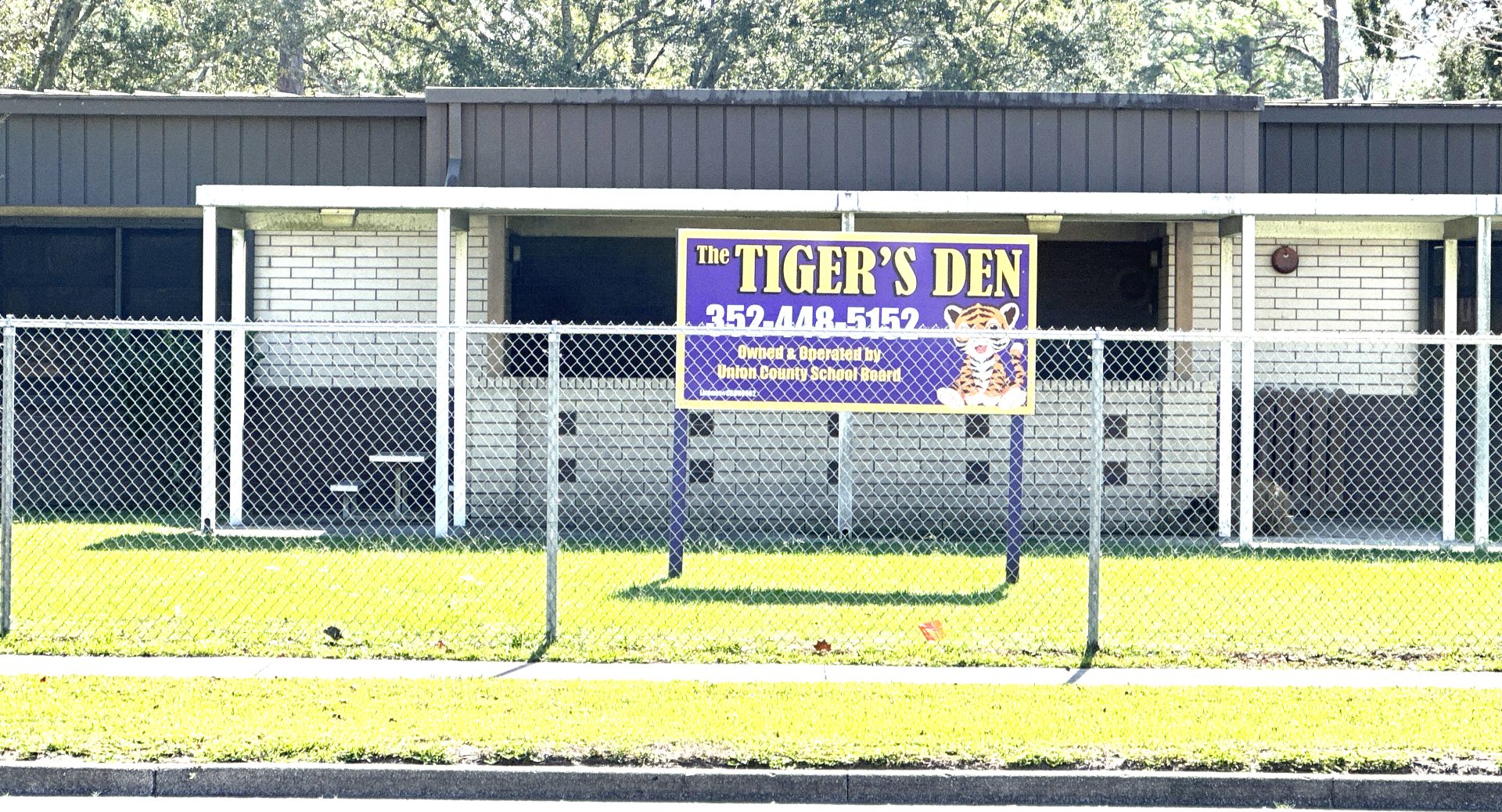
Facing a budget shortfall of over $600,000, Union County School Board members began considering a wide range of budget cuts during a November 5 workshop, including shutting down the district’s preschool, The Tiger’s Den.
Finance Director Renee Prevatt told school board members that the district had lost over $3.5 million in fund balance over the past few years because of state-mandated salary increases without corresponding revenue increases.
Superintendent Mike Ripplinger said the district has already implemented a hiring freeze and is carefully evaluating the need to replace retiring personnel.
Prevatt also presented school board members with the impacts of other possible cuts, including reducing summer hours for district personnel, reducing paper and copying costs, eliminating one health benefit the district pays for employees, cutting a cell phone stipend the district provides to some workers, and asking sports teams, parents, or community organizations to help pay for transportation to extracurricular activities.
Ripplinger told board members he could save around $100,000 a year by reducing the summer hours of district employees. He added that the district pays around $334,000 a year for summer work, and unlike the regular school year, the state does not pay FTE money for students attending summer school.
However, with annual losses of around $230,000, the district-operated childcare is a significant target for board members seeking to eliminate the district’s deficit.
Prevatt said that Federal COVID money had reduced the Tiger’s Den losses over the past few years, but that funding has run out.
Prevatt told board members that if they implemented all the cuts she outlined in her report, the district would still have a $46,000 deficit.
She added that the board needs to start making decisions about budget cuts in January to realize the needed savings.
Ripplinger added that if the board chose to cut summer hours, employees should be notified as soon as possible so that those who rely on summer income could adjust their household budgets accordingly.
31 jobs lost during 1999 crisis
During its last financial crisis, the school board was unaware of an approaching budget crunch and had difficulty making payroll.
In May 1999, state auditors discovered that the school district had a $1.1 million deficit for the 1998-1999 fiscal year and that a false accounting entry had covered up the overspending.
According to a grand jury report, then-Finance Director David Dose falsified an entry in the district’s books, which recorded a $1.2 million state grant that the district had never received and never applied for.
Dose told investigators that Superintendent Eugene Dukes directed him to make the entry, but Dukes denied the claim.
The grand jury declined to issue indictments resulting from the state attorney’s investigation but criticized the school board for a 10-year pattern of overspending. The panel also criticized the board for not acting on red flags signaled in audits over the previous decade.
The deficit resulted in the district cutting 31 jobs, including 12 teacher slots. The school board also agreed to a state-led recovery plan.
In his testimony before the grand jury, Dose described “years and years of not bad finances, but they were poor and getting worse,” according to a news account.
Private operator possible
Ripplinger told the board that if the district stopped operating the daycare, one termination date might be June 30, 2025. He added that a private operator could be recruited to take over the childcare operation and pay the district rent for the building.
“Union County only has two, what I would call, official daycares,” he said. “That’s the Tigers Den and Little Rainbow’s.”
The superintendent added that Union County parents need childcare operators.
“People have to go to work,” he said. “So, me personally, if it’s something that we’re not going to continue, I would like to be able to find a replacement that could come in and continue to provide services to not only our employees but the people of Union County.”
No bad decisions
The superintendent also emphasized that the district’s financial condition is not because of prior bad decisions.
“We’re not here because of bad decisions,” he said. “We are here in part because of our own successes, but we just simply don’t have the revenues to continue to do all of the extras that we have been able to do.”
Ripplinger acknowledged that some of the board’s cuts will be unpopular. He added, however, that given the recent closure of the West Fraser sawmill and the loss of 130 jobs, the school board’s actions will not have nearly such a negative impact.