BY DAN HILDEBRAN
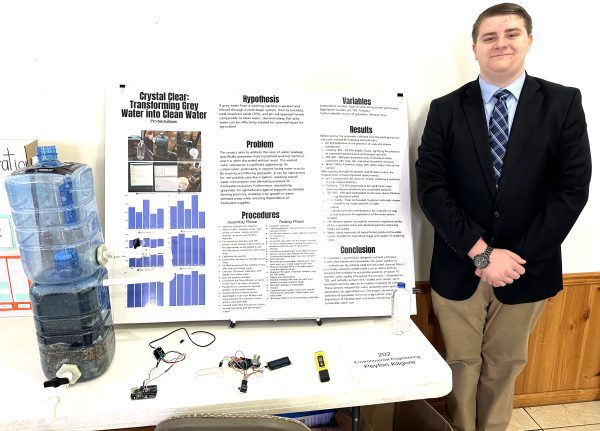
Peyton Kilgore’s water filtering system won the overall prize for the Union County Science Fair on Friday, January 17, and took first place in the Environmental Engineering category.
The Union County High School junior calls himself a big agriculture buff and decided on his project after discovering that water waste is a significant problem in the industry.
“I love agriculture,” he explained. “I surround myself by it. I have a garden in my backyard. I show pigs.”
Kilgore said that once he discovered the magnitude of water waste in agriculture, he realized that gray water waste is not limited to that industry.
“As I looked deeper,” he said, “I found that water waste is actually large in all sorts of margins that comes from our daily lives. One in particular is our household wastewater. So, I began researching, and I found that gray water actually accounts for 50% to 80% of our household water waste.”
The 11th grader said he wanted to create a system that would address that problem. However, instead of pursuing drinkable water, which he said would be extremely difficult, Kilgore sought to reclaim water for agricultural use.
His filtration system includes activated carbon, gravel, sand, and cloth. It also consists of an aeration chamber, air pump, pH meter, and sensors for turbidity, which is a measure of cloudiness, and total dissolved solids.
He used water from a washing machine, which had gone halfway through its washing cycle as his source water, then ran the gray water through his filtering system.
Kilgore reduced the grey water’s pH by around 20%, which showed his system reduced soap and other alkaline substances. He also reduced the fluid’s turbidity by around 95% and total dissolved solids by around 25%.
The high school junior concluded that he achieved his goal of filtering gray water into water for agricultural use.
Kilgore displayed a 16-ounce bottle of his final product, which looked crystal clear, but he cautioned that it is not for human consumption.
“I wouldn’t recommend it because there’s a risk that there would be like a pathogen in there or something like that,” he said. “My system can’t separate out the biological stuff or chemical stuff like that.”
Artificial intelligence beats radiologists
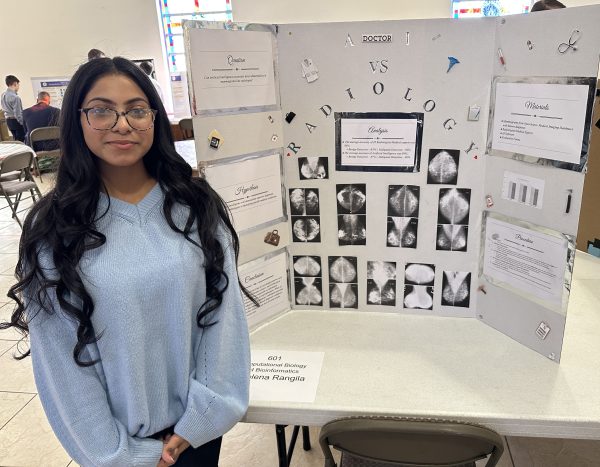
Carolena Rangila was the overall runner-up. She also won the Computational Biology and Bioinformatics category.
Her project evaluated the effectiveness of artificial intelligence in detecting benign and malignant tumors from mammograms.
“Recently, there’s been lots of debates on AI being integrated into radiology, and it’s been very controversial,” she said, “but I wanted to see what impact AI could have for a field I’m about to go into or planning to go into.”
According to the high school junior, her AI model slightly outperformed the 10 radiologists she recruited for the project.
She said she built her model using a data set of images she already had, then trained and tuned the model through several data sets.
“It began picking up on similarities like micro classifications, density of the tissue, and basically any architectural distortion,” Rangila recalled. “It starts to pick up on that— any kind of mass.”
The 11th grader then created a web app for further testing.
She said that even though her model only slightly outperformed the humans, her product will continue to improve while the radiologists will likely not get better.
“I’m still refining it, still training it with more data,” she said. “So, my accuracy will continue to go up. And AI is a self-learning program, so it keeps learning. My accuracy is still going up. I think for the FDA to approve of it, it has to reach at least 98% accuracy.”
Bottled water not as healthy as he thought
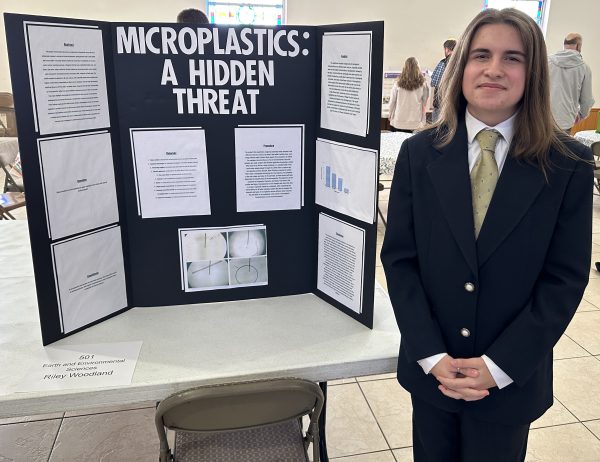
Riley Woodland was the third-place overall winner and won the Earth and Environmental Sciences category. His project centered around the problem of microplastics in water.
The Union County High School sophomore said he read a newspaper article that claimed microplastics had been detected in humans and can cause side effects like cardiovascular disease, intestinal issues, and even cancer in some cases.
Woodland took water samples from bottled water, Butler Lake, municipal supplies, and a filtered refrigerator.
He then ran his samples through coffee filters and examined the results with a microscope.
Woodland found that bottled water had the highest concentration of microplastics, followed by tap water, lake water, and filtered refrigerated water.
“I’ve always drank bottled water my entire life,” he said, “and so seeing that that actually can harm me now is quite astounding.”
Other winners
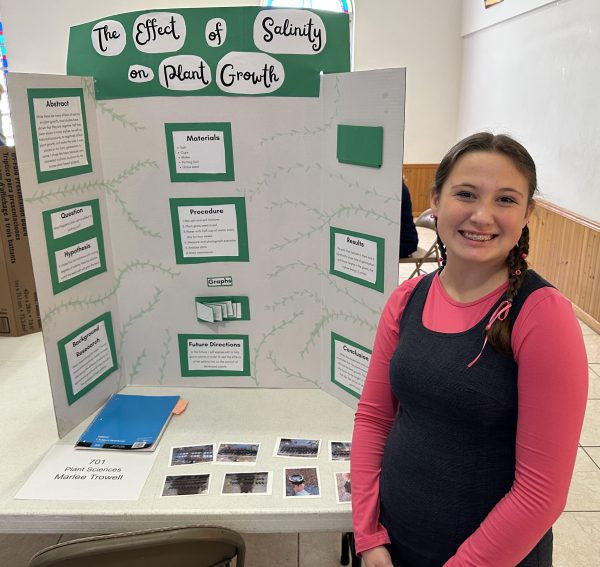
Marlee Trowell won the Plant Sciences category with “The Effect of Salinity on Plant Growth.”
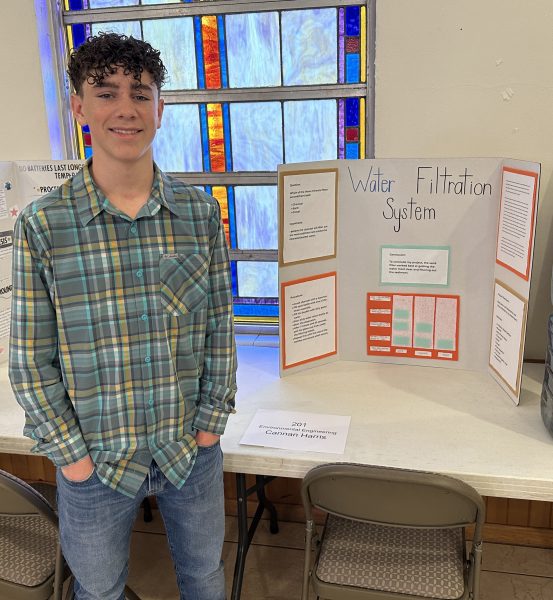
Canaan Harris placed second in Environmental Engineering behind Kilgore. Harris tested different water filters and determined that sand worked better than charcoal or gravel.
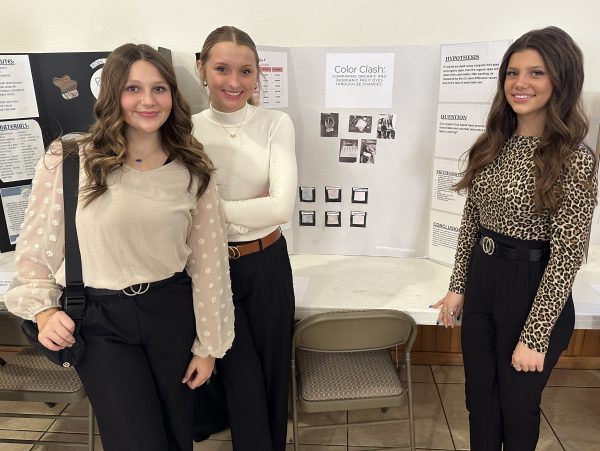
Jayden Johnson, Hayden Robinson, and Madison Woods worked together to win the Material Sciences category with “Color Clash: Comparing Organic and Inorganic Fruit Dyes.”
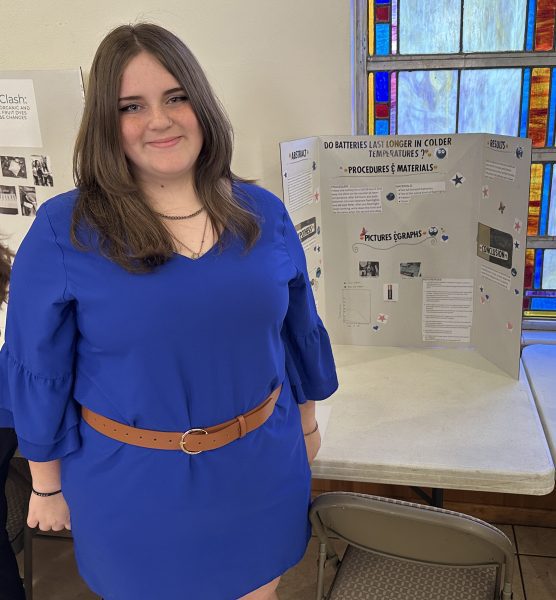
Phoenix Forbes took second in Material Sciences by testing an old family tradition: freezing batteries to make them last longer. Although her family had stashed the AAs and AAAs in the icebox for generations, Forbes concluded that the hack was worthless.
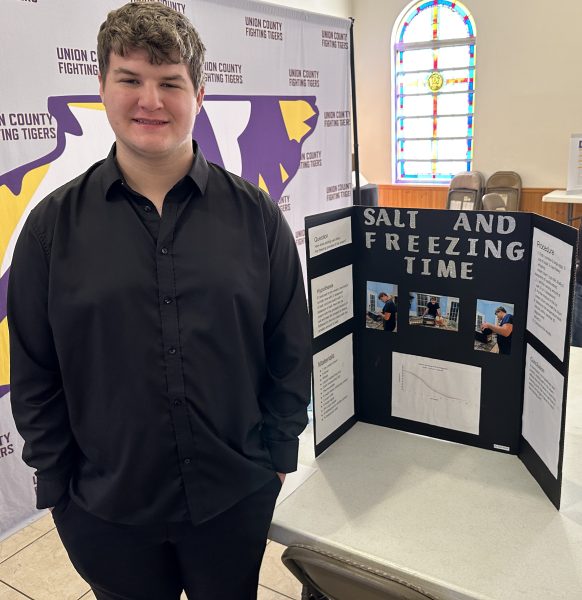
Russel Wade won the chemistry category with “Salt and Freezing Time.”
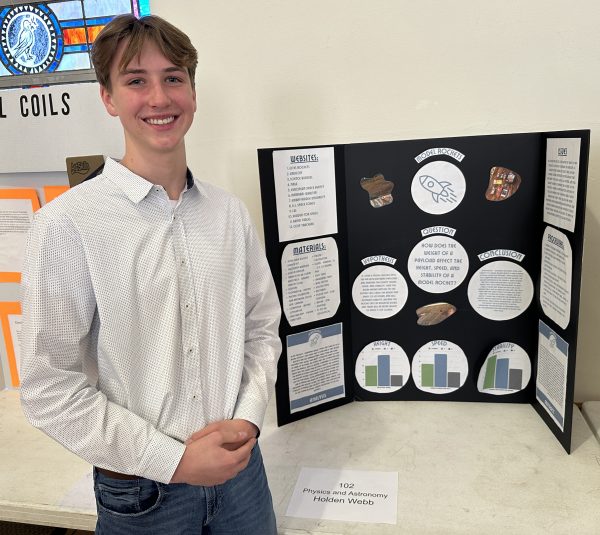
Holden Webb tested the height, speed, and stability of model rockets with various payload weights. He used pennies to alter the weight of the rockets and won the Astronomy and Physics category.
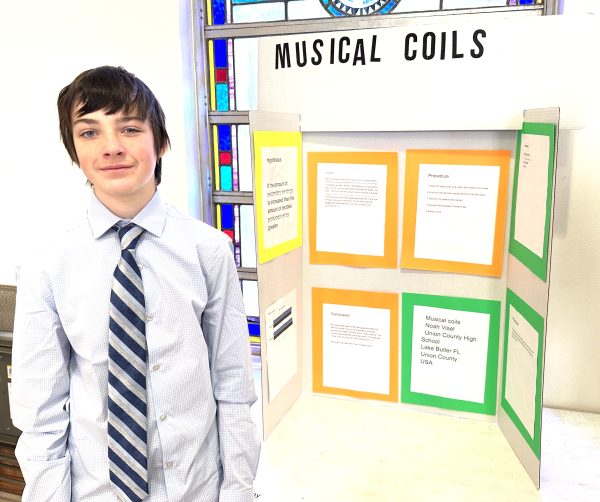
Noah Visel placed second in Astronomy and Physics with “Musical Coils.”