Iconic Animal Hospital reopens

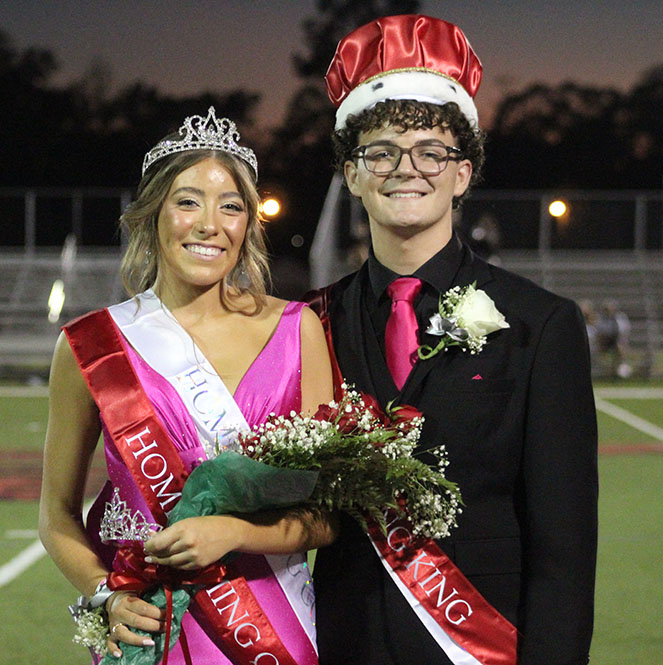
Lisa Weisgerber, D.V.M. (left) moved to Florida in 2016 and now lives on a horse farm in the Hawthorne area. Dr. Jennifer Blackburn (right) took over Larry Parrish’s practice in Keystone Heights 10 years ago. She and her husband, Charlie, recently opened Starke Animal Hospital.

BY DAN HILDEBRAN

[email protected]

For 55 years, Robert Stewart “Doc” Mullins operated his animal hospital at the corner of State Road 100 and Southeast 144th Street. Mullins was well known in Bradford County, not only for his clinic, which he operated from 1955 to 2010, but also for his 20-year membership on the Clay Electric board of trustees and involvement in other community organizations.

Dr. Jennifer Blackburn and her husband, Charlie, recently opened their animal hospital in the building that formally housed Mullins’s clinic after around a decade of inactivity.

Dr. Blackburn said the current building was Mullins’s second clinic, replacing the one nearer to the highway, which is now a parking lot.

The upgraded facility has a treatment area, digital x-ray equipment, blood machines, and a break room.

Dr. Blackburn retained Dr. Mullins’s veterinary caduceus, which hangs above the facility’s front door. “Every time I walk under it,” Blackburn said, “it reminds me of our connection to this building’s history.”

Lisa Weisgerber, D.V.M., is at the hospital Monday, Tuesday, Thursday, Friday, and every other Saturday.  Originally from West Virginia, Weisgerber moved to Florida in 2016 and now lives on a horse farm in the Hawthorne area.

Caroline Chern, D.V.M., is at Blackburn’s Keystone Heights Hospital four and a half days a week, and the owner said she floats between the two locations.

Currently, the Starke facility accepts walk-ins only, so if the Keystone hospital is booked, pet owners can drive 10 miles north to the Starke facility.

Dr. Blackburn took over Larry Parrish’s practice in Keystone Heights 10 years ago. A couple of years later, she heard that the veterinarian who was practicing in Dr. Mullins’s building was retiring. She called Mullins’s family to see if the property was for sale. However, the time wasn’t right.

Before the COVID-19 Pandemic, Blackburn and the family got together again, and the two parties reached a deal. However, the pandemic, supply chain issues, and a change of construction contractors delayed the facility’s re-opening by four years. 

Dr. Blackburn said that even though Dr. Mullins’s children don’t practice veterinary medicine and no longer live in the area, she thinks they are pleased their father’s property is once again used to treat animals.

Dr. Blackburn retained Dr. Mullins’s veterinary caduceus, which hangs above the facility’s front door.

“Every time I walk under it,” Blackburn said, “it reminds me of our connection to this building’s history.”

Shortage of veterinarians

Dr. Blackburn said that even with the Town and Country clinic down the street and Bradford Pet Care on Call Street, there is still a shortage of veterinary care providers in Bradford County.

“That’s why this is a walk-in facility,” she said. “We wanted to make it as convenient as possible. Of course, there will be a wait if you need diagnostics, x-rays, or blood work, but we can do it all right here.”

Dr. Blackburn said the nationwide shortage of veterinarians grew during the pandemic.  

“I think it was a combination of factors,” she said. “One reason is that more people have pets.”

She added that as more people worked from home and more parents homeschooled their children during pandemic lockdowns, getting a dog or cat seemed like a natural next step.

Dr. Weisgerber added that she often sees pets acquired during COVID-19.

“We see them all the time,” she said. “They’re what, four years old now? And the owner’s, like: ‘I used to work in the house, and now I’ve left, and now he’s stressed out because I don’t work from home anymore.’ We get that story a lot.”

Dr. Blackburn said another factor adding to the shortage of veterinarians is the expanding profession.

“It’s not just rural animal medicine or small animal medicine,” she said of veterinarians’ choices. “You have a lot of different options. You have emergency medicine, specialties, and mobile practices coming up everywhere. And I think the smaller rural practices are a little bit harder to attract veterinarians to.”

She also said veterinary schools slowed the pace of graduates during the 2020-2022 outbreak and that the dearth of new veterinarians continues.

“There are only 21 vet schools in the United States, and they graduate 100, 150 students each year,” Blackburn said. “When I graduated, there were 73, I think, in my graduating class, and now it’s more like 120.”

Dr. Weisgerber said that during her clinical year at the University of Florida’s College of Veterinary Medicine, administrators were expanding the school’s capacity to handle more students.

Corporate consolidation

Both veterinarians said another trend in their profession is corporate consolidation.  Dr. Blackburn said corporations have purchased several practices in Gainesville without rebranding the facilities, giving them the appearance of a locally owned practice.

She added that veterinarians operating in those businesses sometimes have to follow different rules and guidelines, which isn’t conducive to individual patient care.

Dr. Weisgerber said she worked at a practice in Gainesville that was in the process of being purchased by a corporate group.

She said, “You have no freedom of medicine because a corporation makes a cookie-cutter model of how you treat something.”  

Dr. Blackburn said pet owners on a limited budget need care alternatives for their animals.

“We can offer the highest standard of care,” she said, “IV, catheters, in-house blood work, digital x-rays, all of that. But also, if you can’t afford that, we can offer you another option too.”

Less products, more services

Dr. Blackburn said another trend in veterinary medicine has been the emergence of the online market.

“We don’t stock food in the Starke office because most people buy it online,” she said. “Product distribution used to be huge in the veterinary field, but it’s not anymore. What scares me a little bit is when it starts moving into heartworm and flea intake products because people start to make their own decisions, and they’re not always the right decisions for their animals. But the pet products, the pet toys, the pet food, the pet litter, all of that has gone online.”

Dr. Blackburn said providers like herself are now focusing more on services, which fits well into another trend in which people see their pets now more like family members.

“It’s not just a yard dog,” she said. “It’s not just a farm dog. It’s a member of the family.”

“If you walked your dog in a stroller when I was growing up, you were considered crazy,” she continued. “Whereas now it’s extremely normal in society. It’s very common, and nobody’s going to think you’re horrible or weird.”

Since pets are also living longer, their medical needs are expanding. Services like dental cleanings and cancer treatments were rare in pets decades ago because dogs and cats did not live long enough to develop gum disease and malignancies.